

In an era dominated by ambient air conditioning, heated seats, and modern temperature-controlled living, the human body rarely faces thermal challenges. Yet, exposing our bodies to deliberate environmental extremes—intense heat and freezing cold—is one of the most powerful ways to unlock peak physical recovery, mental resilience, and neurochemical balance.
Known as contrast therapy, the practice of alternating between saunas and ice baths has evolved from an ancient Nordic tradition into a cornerstone of modern sports science and biohacking protocols.
🧠 1. The Dopamine Surge: How Cold Plunges Rewire Focus
When you submerge your body into cold water—typically between 45°F and 55°F (7°C–13°C)—your nervous system immediately registers a profound physiological stress event. The initial gasp reflex and rapid heart rate are driven by a massive spike in sympathetic nervous system activity.
The Neurochemical Cascade
-
Norepinephrine & Adrenaline: Cold exposure triggers a rapid release of norepinephrine and epinephrine into both the bloodstream and central nervous system. This causes acute vasoconstriction, sharpens alertness, and reduces systemic pain perception.
-
Long-Lasting Dopamine Release: Unlike nicotine, sugar, or social media scroll sessions—which trigger sharp dopamine spikes followed by severe crashes—deliberate cold exposure triggers a sustained rise in baseline dopamine levels. Research shows cold plunges elevate dopamine by up to 250% above baseline, maintaining elevated mood, drive, and mental clarity for hours post-plunge.
🫀 2. Vascular Flushing: The Ultimate Circulatory Pump
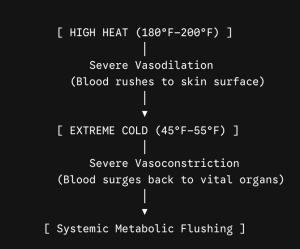
The physical sensation of contrast therapy comes from its dramatic impact on the cardiovascular system. Alternating rapidly between extreme heat and extreme cold creates a powerful mechanical pumping effect across your blood vessels.
-
Heat-Induced Vasodilation: Inside a 180°F–200°F (82°C–93°C) sauna, blood vessels expand significantly. Blood surges to the skin surface to dissipate heat, heart rate increases (mimicking moderate cardio activity), and sweating flushes metabolic cellular waste.
-
Cold-Induced Vasoconstriction: Moving directly into an ice bath triggers instant vessel constriction, forcing blood inward toward vital organs to preserve core body temperature.
-
Metabolic Clearing: Switching back and forth acts as a vascular pump, clearing lactic acid, reducing systemic muscle soreness, and accelerating cellular nutrition delivery to recovering tissue.
🧬 3. Heat Shock Proteins & Biological Longevity
While cold exposure drives immediate focus and mood regulation, high-heat sauna sessions initiate deep cellular repair mechanisms through Heat Shock Proteins (HSPs).
-
Cellular Repair: When exposed to high heat, cells produce HSPs to refold misfolded proteins, repair damaged cellular structures, and prevent oxidative stress.
-
Cardiovascular & Brain Benefits: Frequent sauna use (3 to 5 times weekly) has been linked in long-term clinical studies to a significant reduction in cardiovascular risk, improved blood vessel elasticity, and increased production of BDNF (Brain-Derived Neurotrophic Factor), which supports neuroplasticity and memory retention.
📋 4. The Standard Contrast Protocol
To safely maximize the cognitive and recovery benefits of contrast therapy, follow this science-backed baseline protocol:
| Stage | Modality | Target Temperature | Target Duration |
| Stage 1 | Heat (Sauna) | 175°F – 195°F (80°C – 90°C) | 15 – 20 minutes |
| Stage 2 | Cold (Ice Bath / Plunge) | 48°F – 55°F (9°C – 13°C) | 2 – 3 minutes |
| Stage 3 | Rest / Re-hydrate | Room Temperature | 3 – 5 minutes |
| Repeat | Repeat Cycle | 2 to 3 Rounds Total | Finish on Cold for Alertness |
Best Practices for Implementation:
-
End on Cold for Mental Clarity: If your goal is daytime energy, mental sharpness, and metabolic stimulation, end your session on cold and allow your body to re-warm naturally (Shiver-Factor).
-
End on Heat for Relaxation: If you are practicing contrast therapy in the evening to prepare for deep sleep, end your session in the sauna to promote muscle relaxation and core temperature cooling afterward.
-
Prioritize Safety & Hydration: Always replenish fluids and electrolytes lost during sauna sweating, and avoid pushing cold exposure beyond 3 to 5 minutes per cycle.
💡 The Bottom Line
Deliberate thermal stress is one of the most effective, zero-supplement tools available for optimizing human performance. By subjecting your body to controlled thermal stress, you teach your nervous system to stay calm under pressure—delivering sharper focus, faster physical recovery, and resilient mental health.