

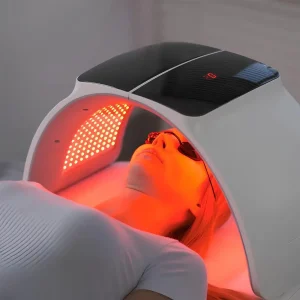
For decades, light was viewed primarily through the lens of vision—a tool to illuminate our physical world or regulate basic sleep-wake cycles through sunlight. Today, modern neurobiology and cellular medicine have revealed a far more profound truth: light is targeted biological fuel.
Known scientifically as photobiomodulation (PBM), the deliberate application of red and near-infrared (NIR) light has rapidly emerged from specialized medical research into a core pillar of biohacking, athletic recovery, and cognitive optimization.
By delivering precise light wavelengths directly into human tissue, red and near-infrared light therapy bypasses traditional metabolic pathways to recharge cellular energy, soothe chronic neuroinflammation, and accelerate systemic recovery.
🔬 1. How Light Becomes Cellular Energy (ATP)
At the heart of photobiomodulation is a straightforward biological mechanism: converting light photons into chemical energy inside your cells.
Human tissue responds specifically to a narrow band of light known as the “optical window”—typically between 630nm and 850nm. Within this range, light penetrates skin, fat, and bone without being absorbed by surface water or melanin.
       [ Red Light (630nm–660nm) ]         [ Near-Infrared Light (810nm–850nm) ]
                    │                                         │
       Surface & Skin Absorption                 Deep Tissue & Skull Penetration
                    │                                         │
                    └───────────────────┬─────────────────────┘
                                        │
                                        ▼
                      [ Photons Absorbed by Mitochondria ]
                                        │
                         (Cytochrome c Oxidase Activated)
                                        │
                                        ▼
                      [ Massive Surge in ATP & Energy ]
The Mitochondrial Engine
-
Targeting Cytochrome c Oxidase: Inside your cell mitochondria, an enzyme called cytochrome c oxidase (CCO) plays a critical role in producing ATP (adenosine triphosphate)—the fundamental currency of cellular energy.
-
Displacing Nitric Oxide: Under stress, fatigue, or aging, harmful nitric oxide (NO) binds to CCO, blocking oxygen usage and slowing down energy production.
-
Photon Activation: Red and near-infrared photons break the bond between nitric oxide and CCO. This frees CCO to bind with oxygen, restoring efficient cellular respiration and driving a massive surge in ATP production.
🧠 2. Near-Infrared Light and Brain Health: Crossing the Skull
While red light (around 660nm) excels at surface-level skin repair and superficial muscle recovery, near-infrared light (810nm to 850nm) possesses a unique physical property: it can penetrate bone and deep soft tissue, including the human skull.
When applied transcranially (directly to the head), near-infrared light reaches outer brain structures, triggering critical neuroprotective responses:
-
Clearing Brain Fog & Neuroinflammation: Transcranial PBM reduces microglial cell overactivation—the primary driver of chronic neuroinflammation—helping resolve persistent cognitive fatigue, brain fog, and executive burnout.
-
Enhancing Cerebral Blood Flow: PBM stimulates nitric oxide release into blood vessels (vasodilation), increasing microcirculation and oxygen delivery to cerebral tissue.
-
Stimulating Neurogenesis (BDNF): Research shows NIR light promotes the expression of Brain-Derived Neurotrophic Factor (BDNF), a key protein responsible for neural repair, synaptic plasticity, and new memory formation.
⚡ 3. Accelerating Physical Recovery & Reducing Systemic Pain
Beyond cognitive enhancements, red and near-infrared light panels are essential tools for athletic performance and tissue repair.
-
Muscle Damage & Soreness (DOMS): Applying PBM before or after exercise reduces lactate accumulation, decreases oxidative stress in muscle fibers, and speeds up post-workout recovery.
-
Joint & Tendon Health: Because tendons and ligaments have limited blood flow, they heal slowly. NIR light penetrates deep into joint capsules, reducing joint stiffness and accelerating collagen synthesis for structural repair.
📋 4. Practical Implementation Protocol
To get the most out of photobiomodulation, consistency, distance, and wavelength precision matter:
| Protocol Goal | Target Wavelengths | Distance from Panel | Session Duration | Optimal Frequency |
| Brain Health & Focus | Near-Infrared (810nm–850nm) | 6 – 12 inches (head/forehead) | 10 – 15 minutes | Daily (Morning) |
| Skin & Collagen Repair | Red Light (630nm–660nm) | 12 – 18 inches | 8 – 10 minutes | 3 to 5x weekly |
| Deep Muscle & Joint Recovery | Dual (Red + NIR Combined) | 4 – 8 inches | 15 – 20 minutes | Post-workout or Evening |
Key Best Practices:
-
Timing Matters: Morning sessions set a positive circadian tone by mimicking natural sunrise light, boosting daytime alertness without disrupting night-time sleep.
-
Target Bare Skin: Photons cannot effectively penetrate clothing. Position bare skin directly in front of the panel.
-
Eye Safety: While red light is generally safe, high-powered near-infrared LED arrays are extremely bright; use protective eyewear if looking directly toward the light source.
💡 The Takeaway
Photobiomodulation bridges the gap between physics and cellular biology. By supplying your mitochondria with the exact wavelengths of red and near-infrared light needed to produce clean cellular energy, PBM offers a non-invasive way to sharpen focus, protect long-term brain health, and speed up body recovery.